On Asia’s rising island of Phu Quoc, Regent unveiled the 2025 edition of Taste Studio, a six-act sensory odyssey where gastronomy, choreography, lighting, and Vietnamese artistry intertwined. A Spectrum of Contrasts invited guests into a world of shadow and light, land and sea, delicacy and depth, redefining immersive dining in Vietnam.
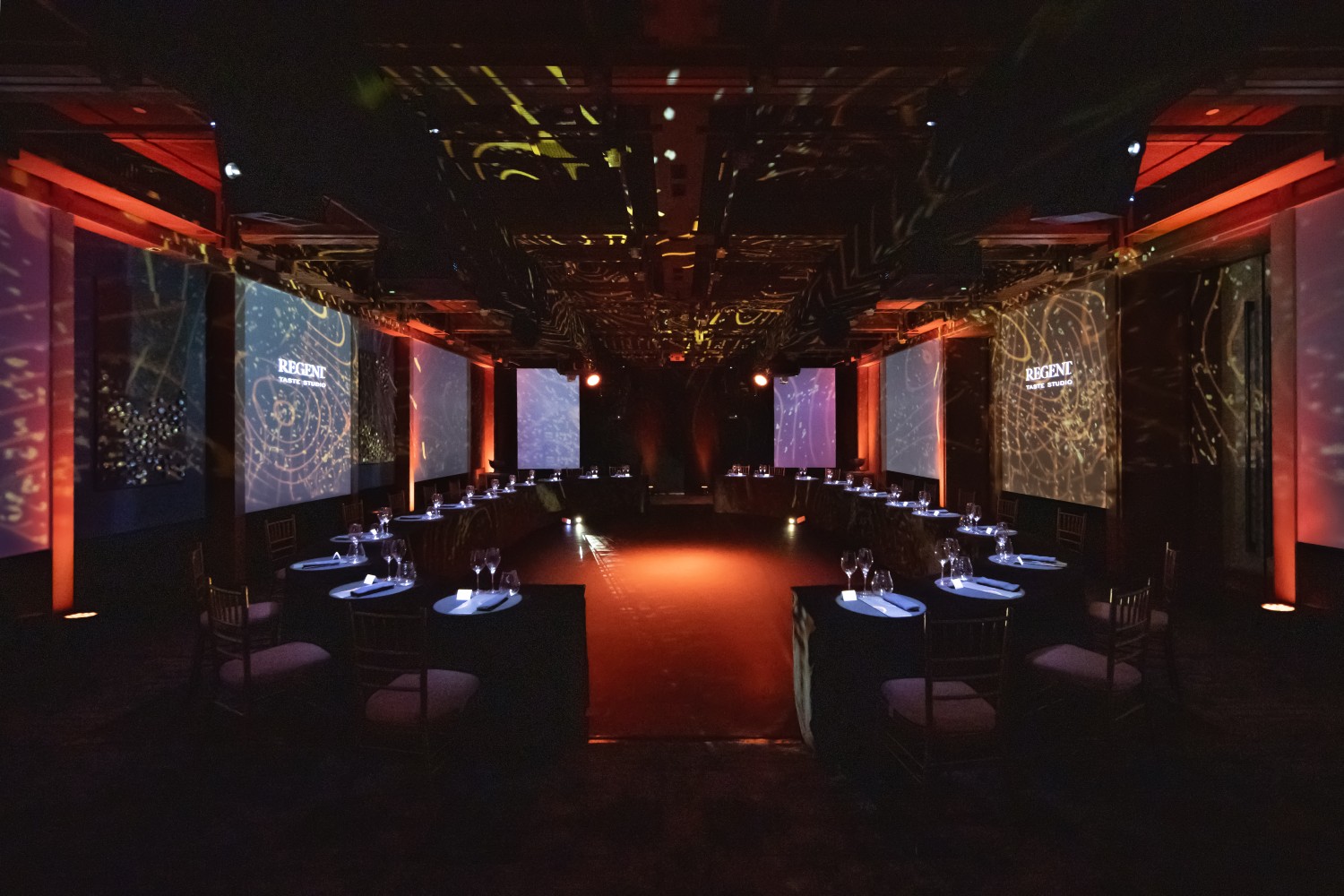
On the sun-blessed island of Phu Quoc, recently named the #1 most beautiful island in Asia by Condé Nast Traveler readers, Regent Phu Quoc - the MICHELIN Key-awarded resort staged the fourth edition of Taste Studio, a signature pop-up concept that blurs the line between cuisine and performance art. Titled “A Spectrum of Contrasts”, it was an atmospheric journey shaped by light, movement, sound, and storytelling. “Each edition of Taste Studio is an exploration,” shares General Manager Juan Losada. “This year, we invited guests to experience the interplay of opposites to see how harmony is often found in contrast.” The result was a sixact composition where chefs, choreographers, dancers, lighting designers, and artisans performed as one ensemble.
Act One: A Pathway Through Darkness & Light
Guests entered through a lantern-lit corridor where shifting hues created a dance of shadow and radiance. Four monochrome canapés introduced the theme, foie gras blackcurrant spheres, jasmine-kissed sea snail tartlets, crab cones with yuzu, and crispy cockles, each a meditation on balance.
Act Two: Where Land Yields to Tide
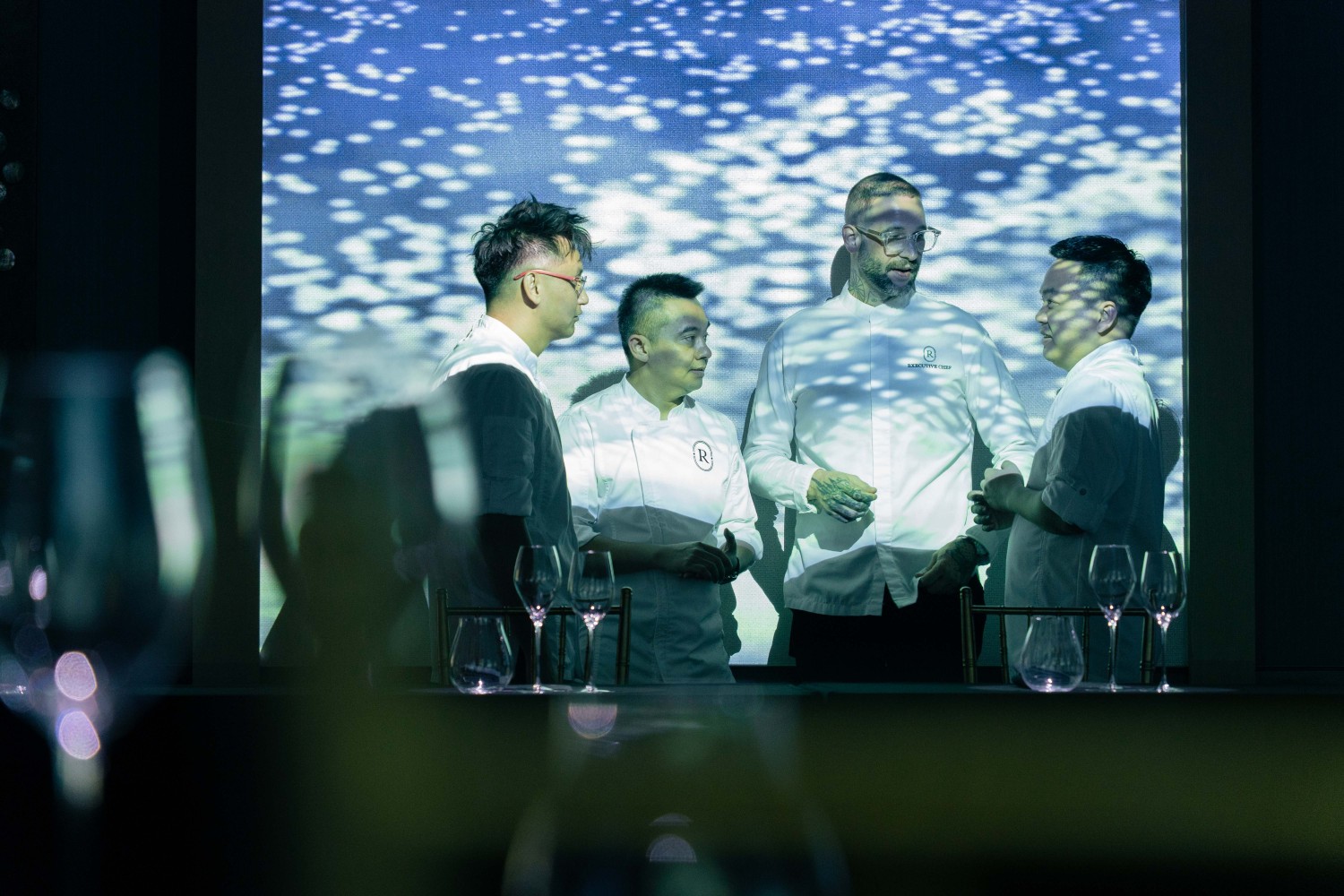
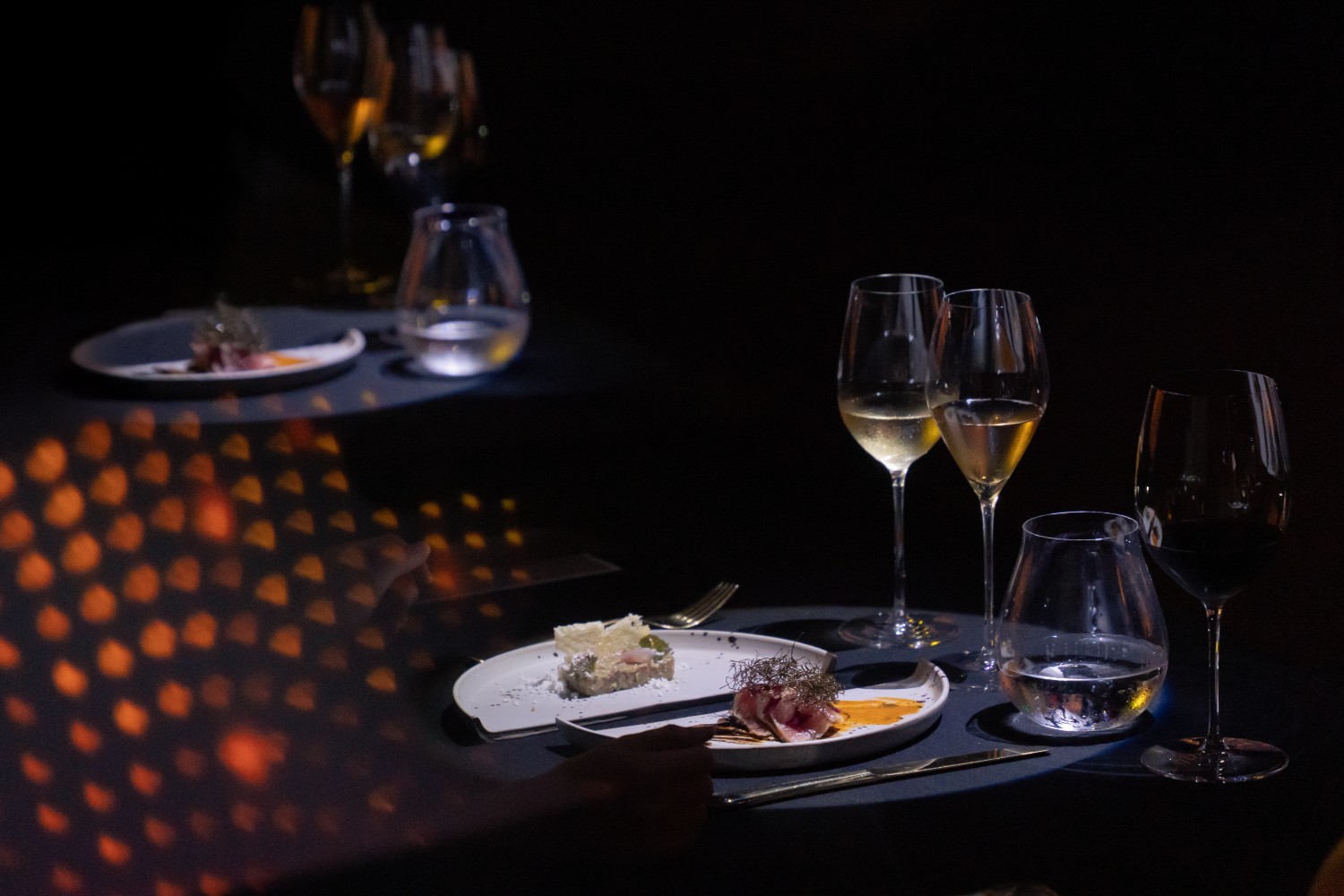
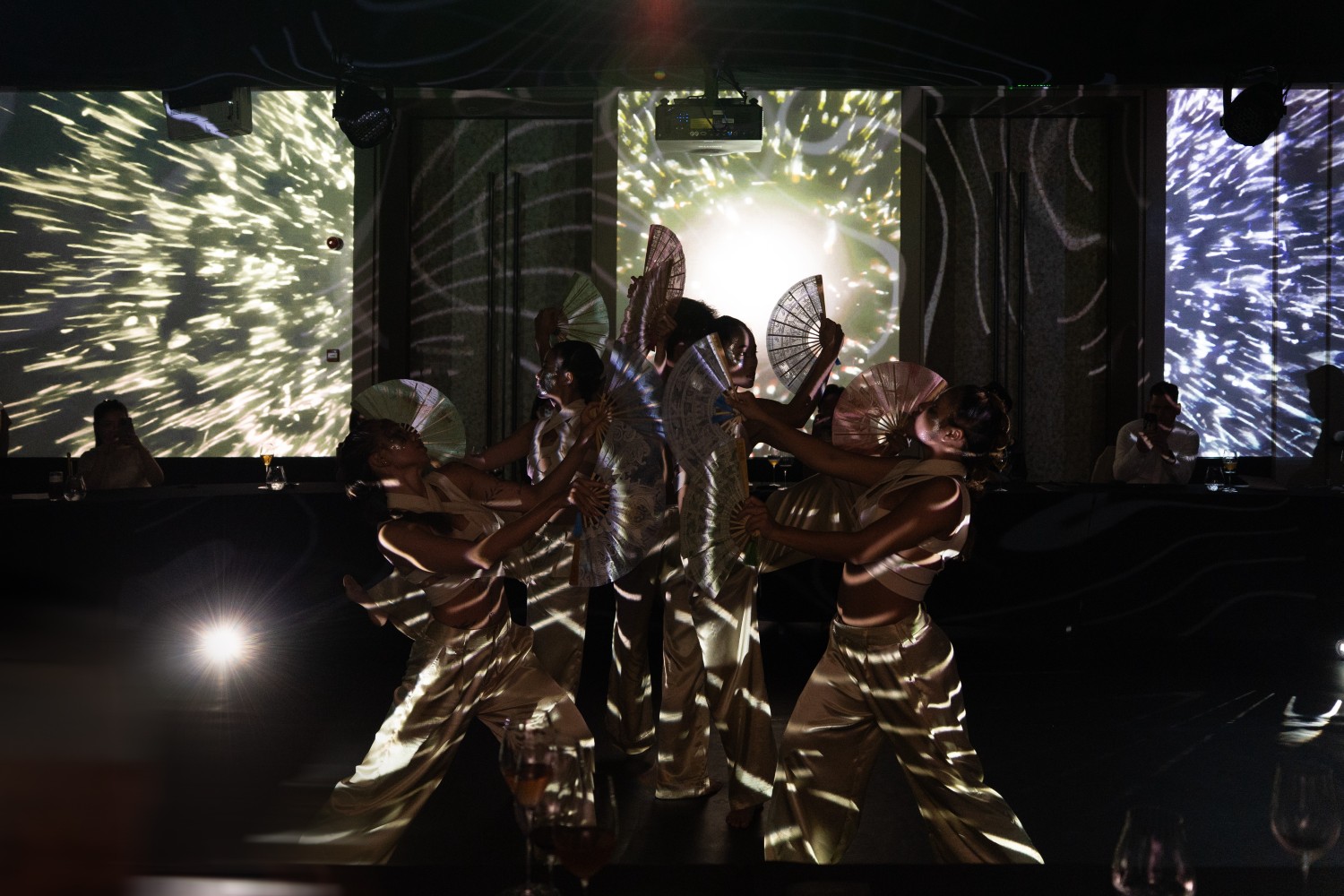
Choreographer Sabra Johnson and the Eva Dance Company expressed the island’s geography in movement — the quiet pushand-pull between mountain and sea. Chef Francesco Andreoni
mirrored this tension through Pigeon de Bresse, paired with Phu Quoc chicken, morels, and a sour fish sphere — a dish anchored in the meeting of two worlds.
Act Three: From Gravity to Grace
Evoking Phu Quoc’s jungles and the weightless drift of birds above the canopy, this act played with density and lift. Chef Andy Huynh presented Braised Abalone with furikake rice, shiso aioli, and yuzu air a dish that rose and settled with equal elegance against AC3’s shifting landscapes.
Act Four: From Dawn to Dusk
Warm amber light gave way to indigo as the performance moved into the rhythms of sunrise and sunset. Chef Andy introduced Japanese A5 Wagyu with bluefin toro and black garlic. a composition expressing the arc of a day, from its brightest peak to its quietest exhale.
Act Five: Between Fire and Frost
Vietnam’s tropical temperament inspired a dichotomy of heat and coolness. Chef Huan Tran reimagined the beloved Canh Chua through modern textures, chili warmth meeting the gentle relief of coconut espuma, a reminder that contrast is central to flavour, emotion, and memory.
Act Six: Chasing Light, Finding Depth
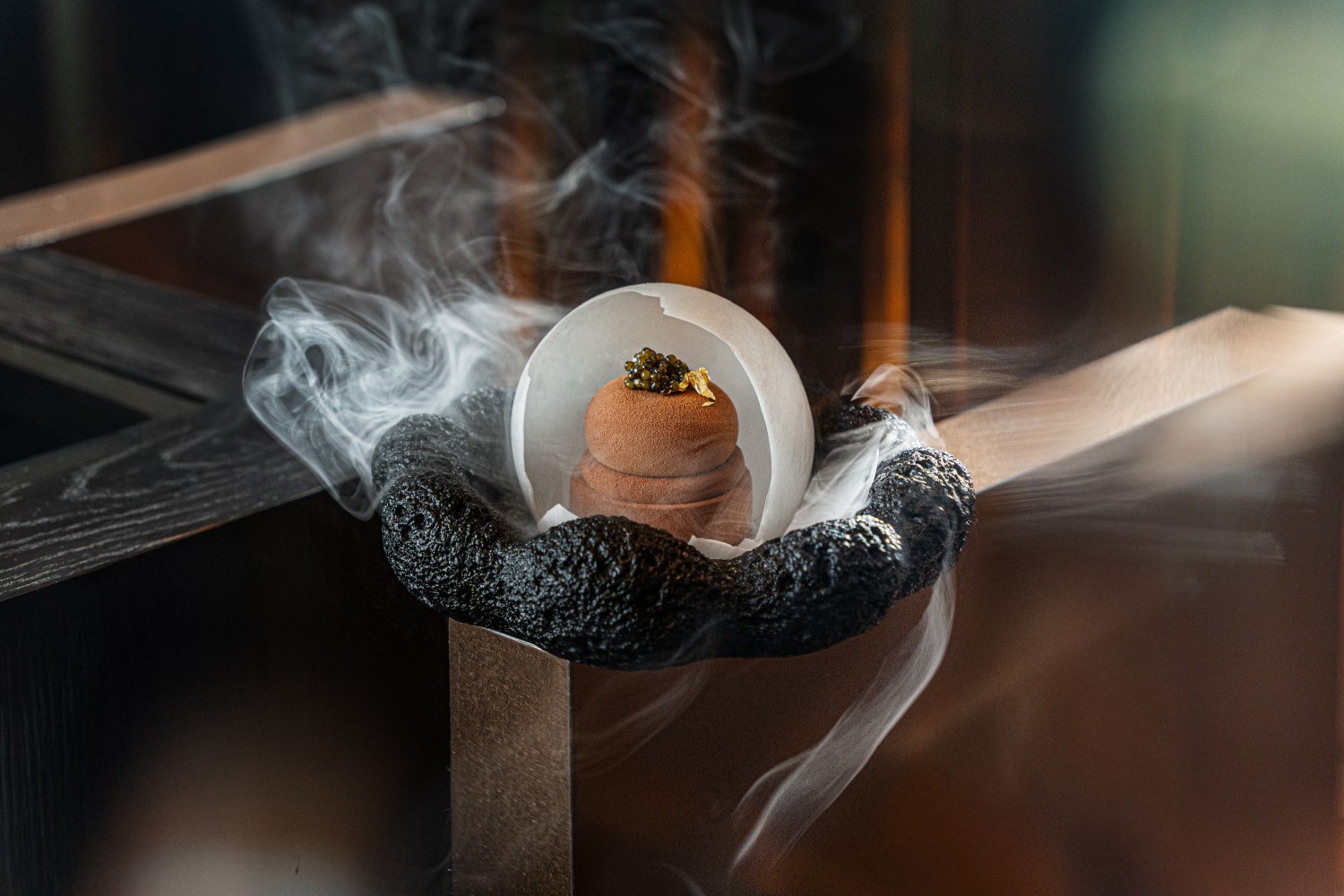
The finale explored dualities rooted in Vietnamese folklore: shadow and brilliance, clarity and mystery. Dak Nong Chocolate, paired with Oscietra caviar and black truffle, offered a profound closing note, deep, bright, and contemplative. Expressive choreography and luminescent design brought the interplay of light and darkness to life.
A Dialogue of Art, Craft and Culture
The evening expanded beyond the plate at the finale. Limebócx infused the setting with northern Vietnamese rhythms layered through modern beats.
Trúc Chỉ, the celebrated paper artists, unveiled “Ethereal Dialogue: Đối Thoại Huyền Vi”, an exhibition tracing pulp as it evolves into luminous, sculpted panels. Their “trucchigraphy” technique, shaped by water pressure and traditional principles, echoed the night’s central motif: that transformation arises from tension, patience, and contrast.
“Collaborations like these remind us that Taste Studio is an immersive conversation,” Losada reflects. “When chefs, dancers, technologists, and artisans speak through their craft, the experience becomes unforgettable.”
More than a dining event, Taste Studio 2025 offered guests a rare chance to inhabit a story, one where Vietnam’s natural beauty, artistic soul, and contemporary creativity converged in a symphony of senses.