High above the movement of Gare de Lyon, Le Train Bleu is a majestic pause in time. Beneath frescoed ceilings and glowing chandeliers, heritage cuisine, gracious service and quiet theatre unfold. This legendary Parisian dining room invites travellers and locals alike into a world where history, beauty and gastronomy meet.
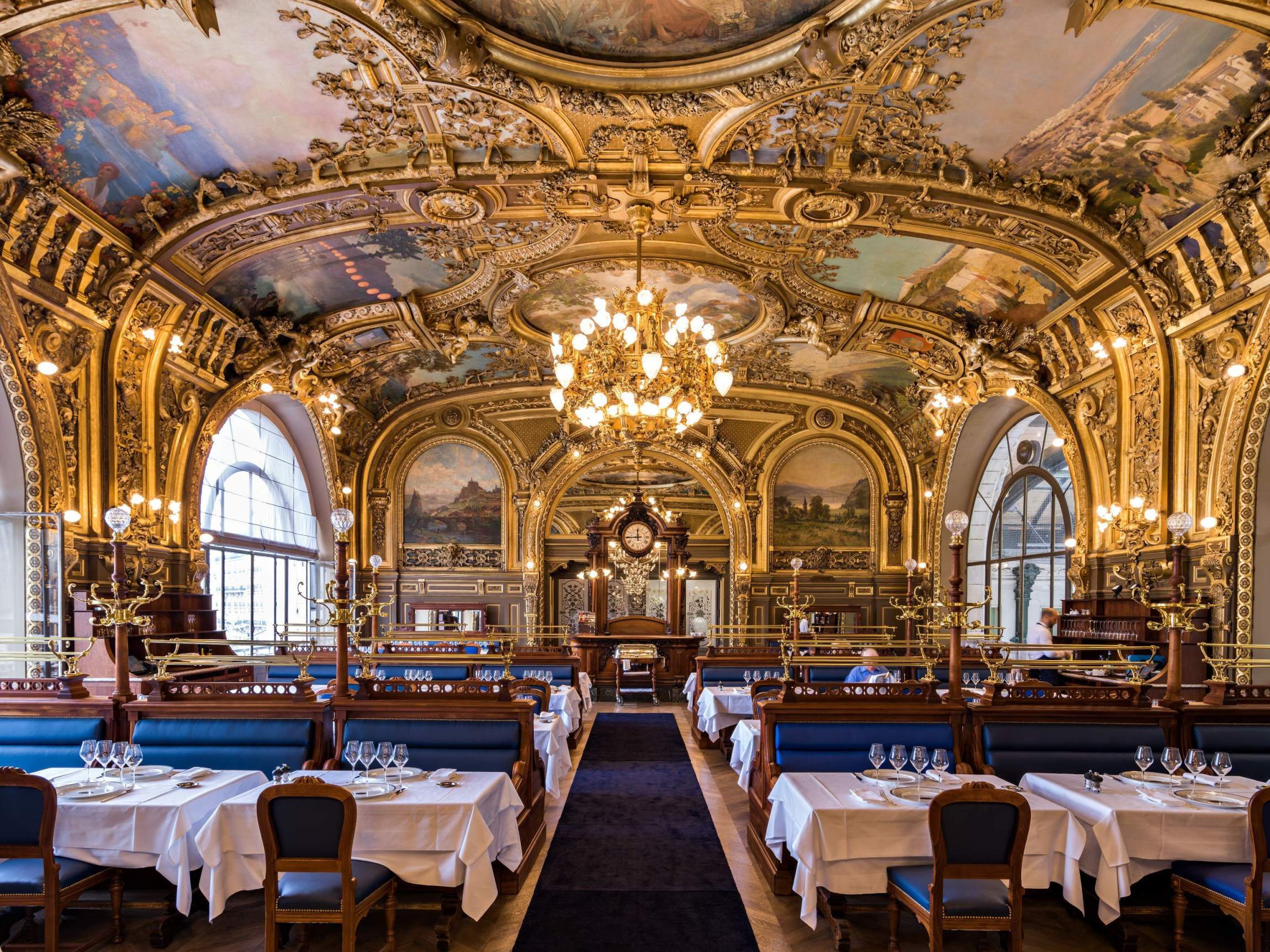
An iconic presence inside Gare de Lyon, Le Train Bleu is a theatre of memory. Here, the spectacle unfolds in two places at once: in the dining room, alive with quiet elegance, and in the kitchen, where heritage cuisine is prepared with reverence, detail and grace.
Created in the early twentieth century, when travel was synonymous with ceremony, Le Train Bleu once offered travellers a final moment of Parisian grandeur before their departure toward the sunlit south. More than a century later, its soul remains untouched. Time softens. History becomes intimate. And the restaurant still embodies France at its most romantic and refined.
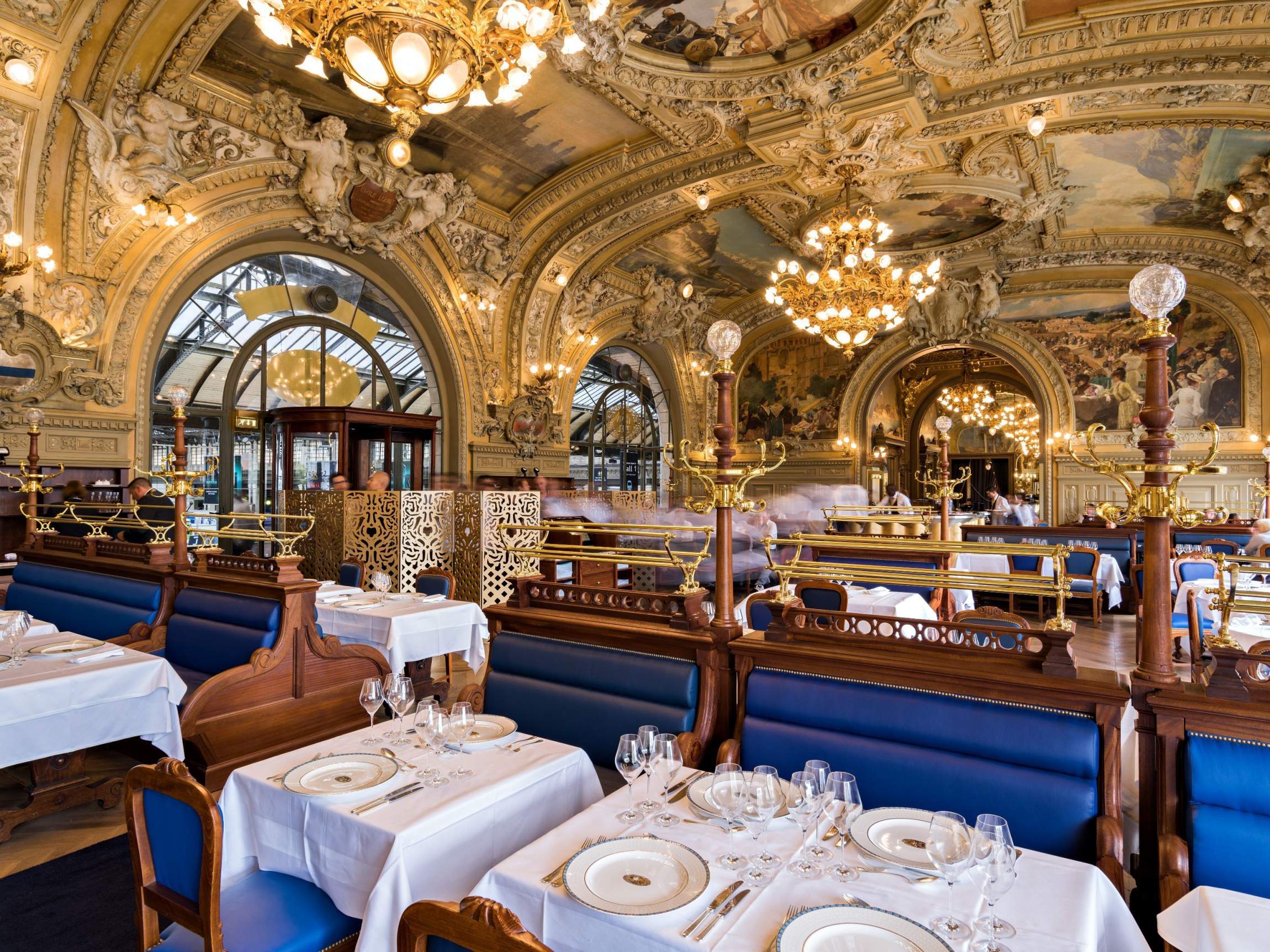
The dining room inspires awe without a word. Sweeping frescoes rise like open skies, brushed with clouds, landscapes and distant light. Gold leaf glimmers softly against dark wood, while velvet banquettes embrace guests in rich, enveloping comfort. Every wall holds a story. Every surface feels touched by another era. One sits. One breathes. One simply looks.
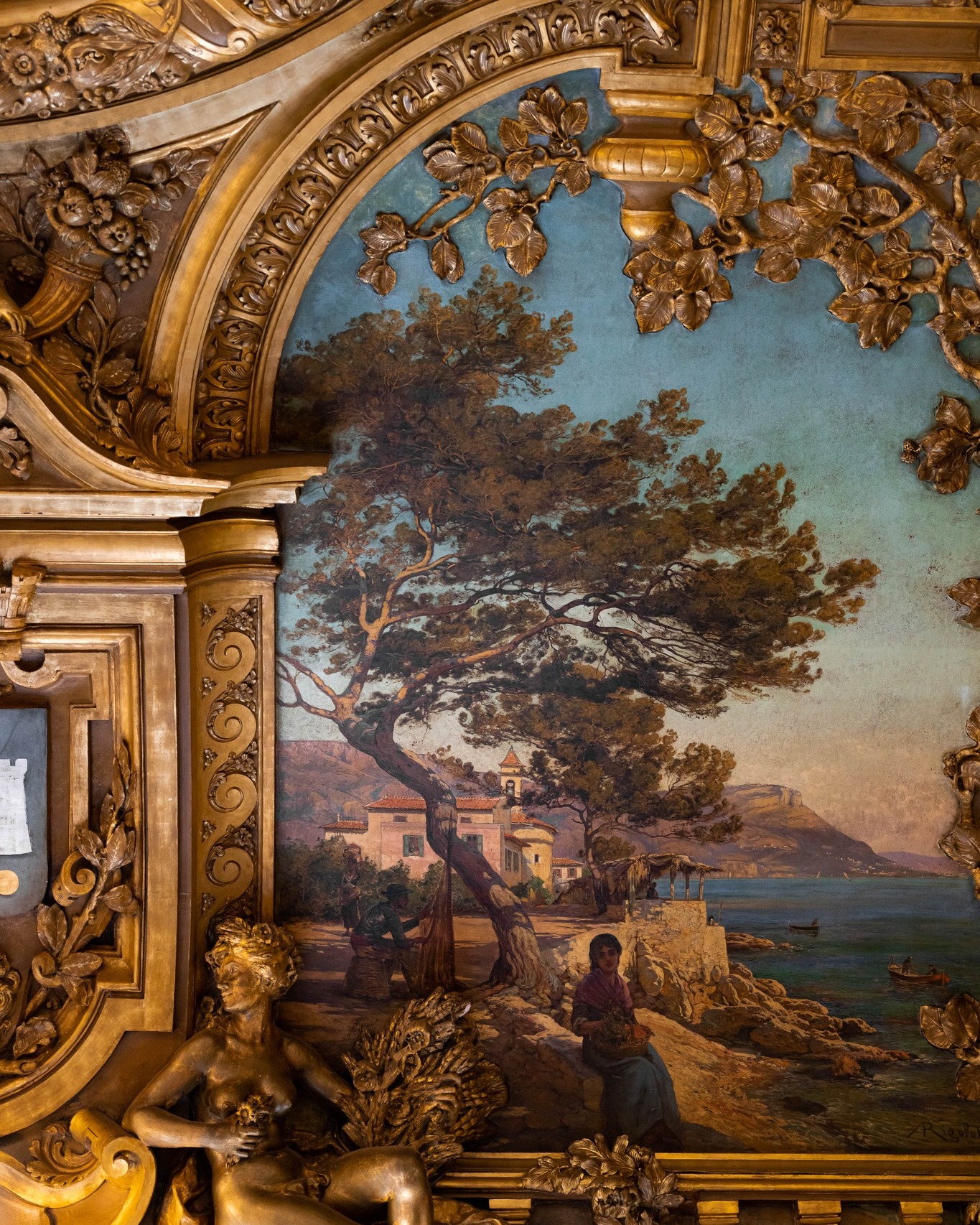
Yet despite the majesty, Le Train Bleu never distances itself from those who enter. Its welcome is sincere. Its service is precise, calm and deeply human. Jackets are taken gently. Menus are offered with a sense of ceremony. The pacing invites conversation. There is no rush here. Only the quiet assurance that this moment matters.
The Spirit of Heritage, Reimagined
Le Train Bleu’s culinary identity is anchored by an exceptional partnership with Michelin starred chef Michel Rostang. Together, they honour the legacy of great French gastronomy, while bringing fresh clarity and refinement to tradition.
Their shared philosophy is simple, but profound: respect the ingredient, follow the season, allow flavour to reveal itself fully. The menu pays homage to the legendary “Station Buffet” of the past, while elevating it into something lyrical and contemporary.
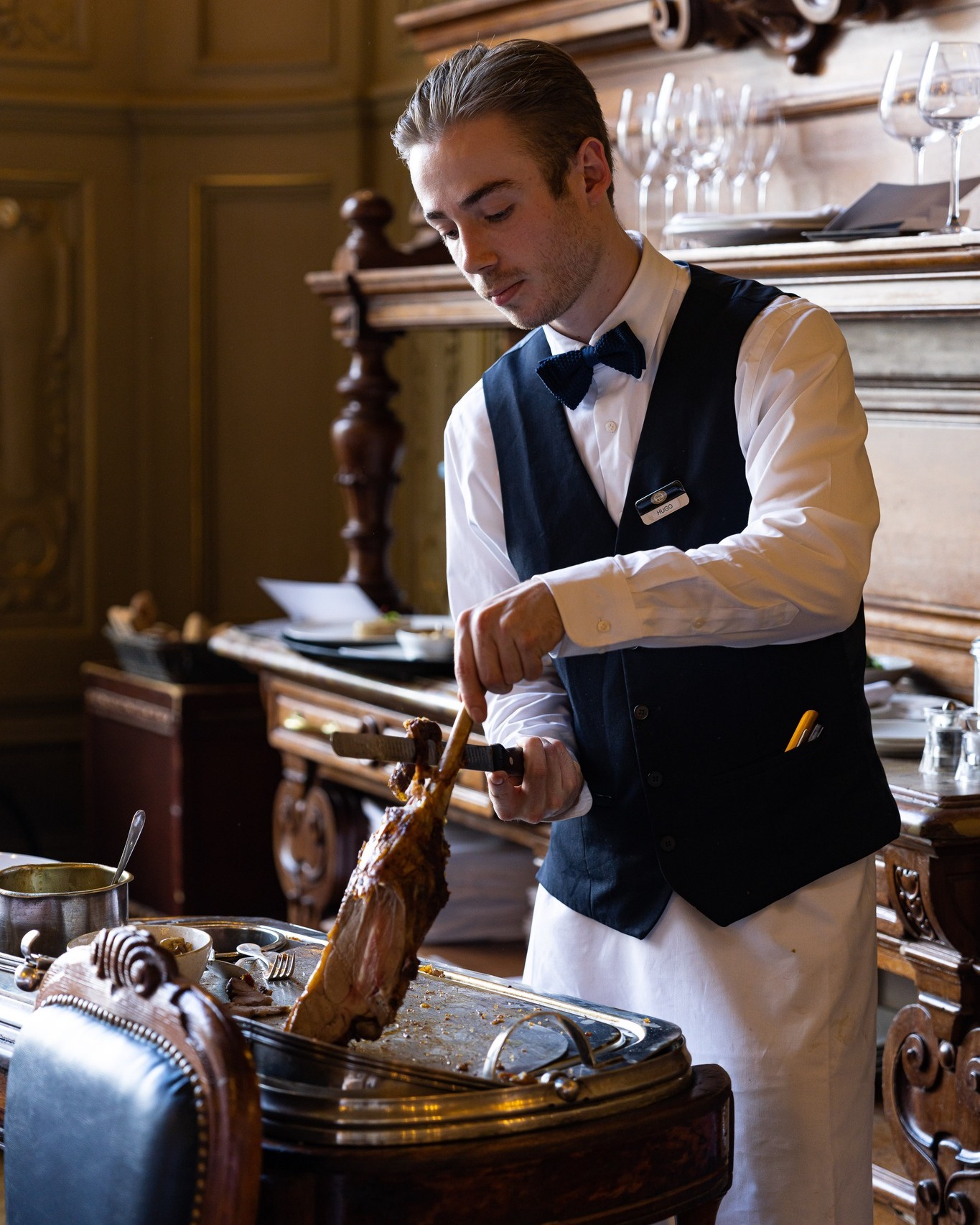
The kitchen celebrates sauces, broths, reductions and slow, soulful cooking. Stews carry depth. Stocks whisper of hours spent patiently nurturing taste. It is cuisine built on generosity and craft, yet executed with elegance and restraint. And in the dining room, service transforms into quiet theatre. Flambéed dishes flicker with subtle drama. Carved meats are handled with ritualistic precision by devoted maîtres d’hôtel who have turned tableside service into art. Every gesture honours the lineage of French dining.
Signature Moments at the Table
The roast leg of lamb remains one of the restaurant’s most emblematic experiences. Brought to the table with dignity, carved carefully before your eyes, it is accompanied by an exquisitely layered gratin dauphinois that seems to melt into memory. The aroma, the warmth, the sheer confidence of it defines French comfort at its highest expression.
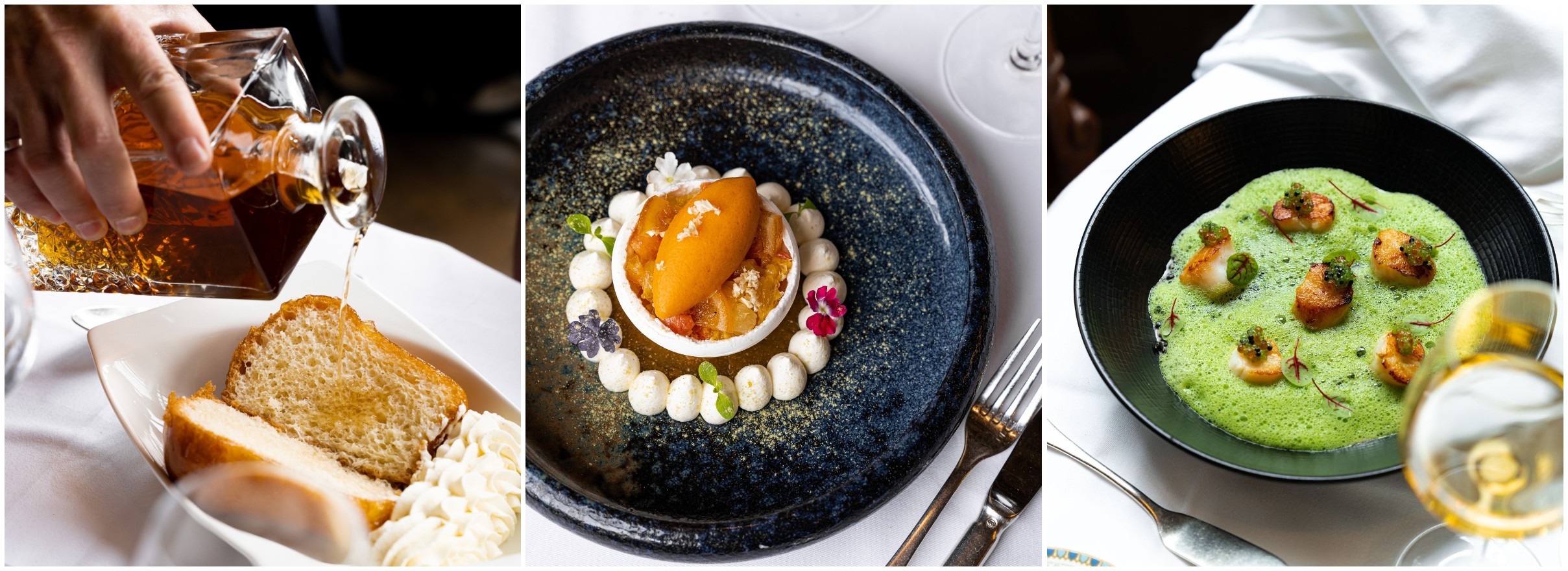
Scallops arrive like small, luminous treasures, seared gently so that their sweetness remains intact. Turbot is treated with grace, cloaked in a silken sauce that supports rather than competes. Quenelles appear weightless, suspended in their delicate richness, echoing the noble kitchens of another era.
Desserts feel like finales to a grand performance. The rum soaked baba is served with ceremony, aromatic and indulgent. The house vacherin layers fragility and freshness, its textures playing softly across the palate. Each finale is both celebratory and intimate. Wine is woven into the narrative rather than imposed upon it. The sommelier listens first, suggests gently, and curates bottles that complement both conversation and cuisine. It is guidance, not instruction. Companionship, not spectacle.
A Place That Belongs to Everyone, Yet Fully to Itself
Le Train Bleu has never been only for travellers, nor merely for tourists. Over the decades, it has gathered a circle of devoted regulars who return again and again, not only for the cuisine but for the feeling of being suspended between worlds. The restaurant’s mythical reputation has never dimmed. Instead, it has deepened. It invites those who enter to slow down, to savour, to rediscover dining as a complete sensory ritual.
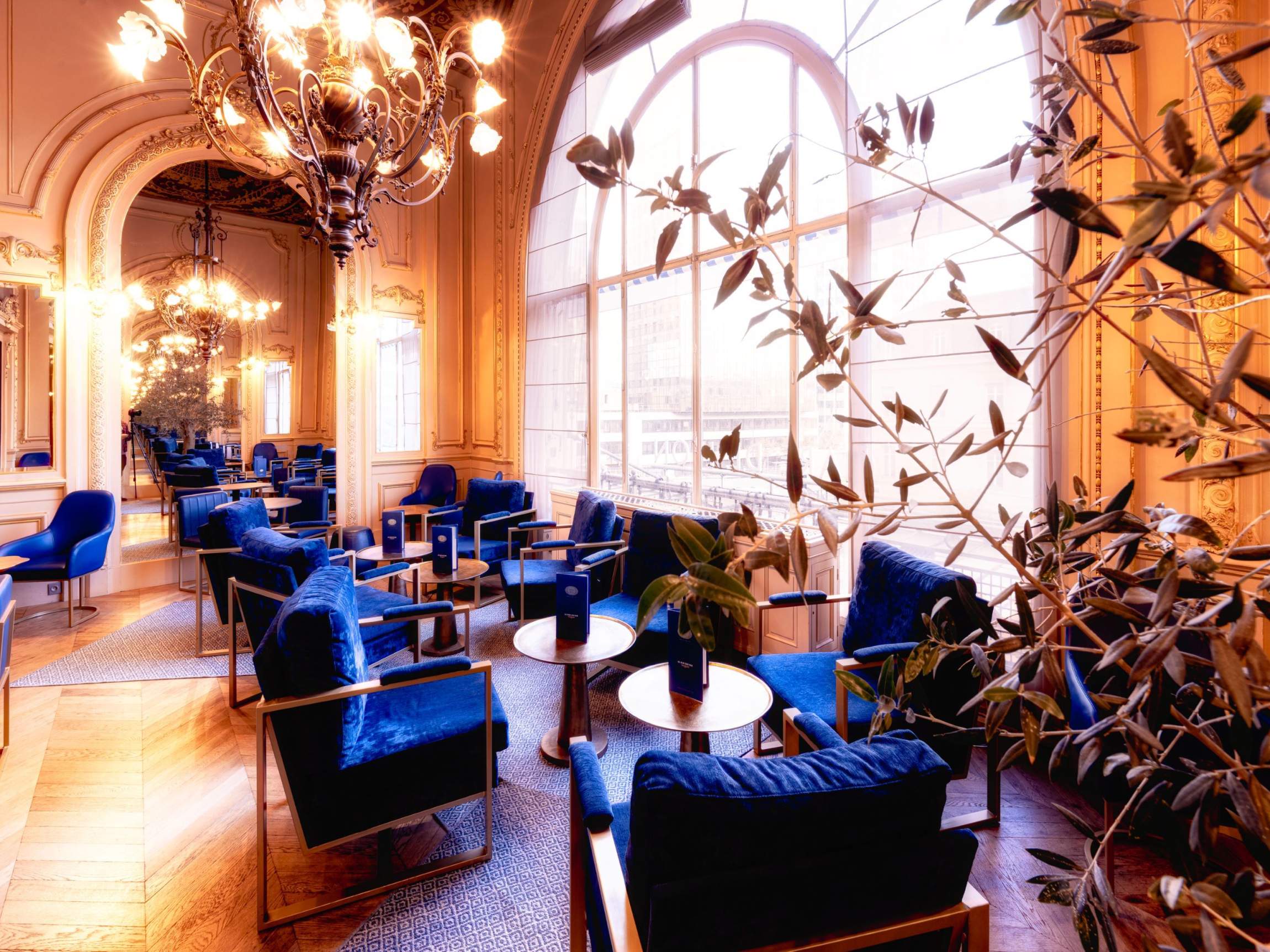
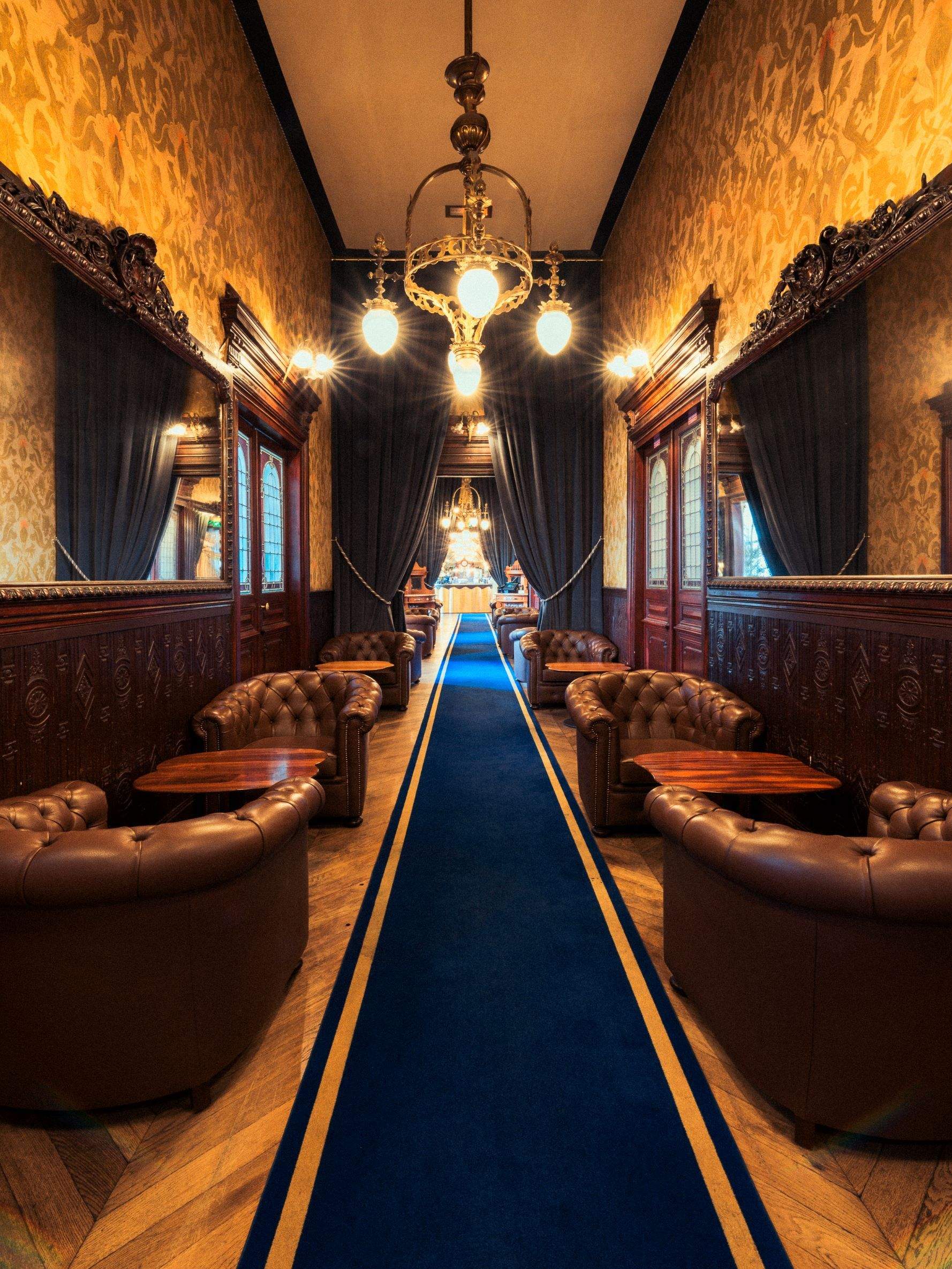
Beyond the main dining hall, the experience extends into more intimate spaces. There is a refined bar composed of smaller salons, dressed in luxurious decor, where conversations unfold softly throughout the day. These quiet rooms invite reflection, offering privacy, warmth and an atmosphere that feels almost cinematic. Each part of the restaurant reveals another facet of its character, as though inviting guests to wander through parallel worlds within the same timeless house.
A Journey Without Moving
Perhaps what makes Le Train Bleu unforgettable is the way it captures both motion and stillness. It exists inside one of Paris’s great railway stations, where departures and arrivals echo across the day. And yet, within its gilded walls, time seems to pause. It is this paradox that enchants writers, artists and filmmakers. The sense that one is always on the threshold of something, at the beginning of a journey, even while remaining perfectly seated at the table.
In an era obsessed with modern speed, minimalism and constant reinvention, Le Train Bleu speaks differently. It reminds us that elegance need not apologise for itself, and that memory can be as luxurious as innovation. Here, beauty is not decoration. It is narrative. It holds the room together. It invites us to linger. Eventually, every dinner ends. Glasses empty. Voices fade. The descent back to the station brings you once again into the movement of trains, footsteps, destinations. And yet, a part of Le Train Bleu travels quietly with you.
The frescoes, the scents, the warmth of service, the pleasure of tradition handled with grace. They return in memory, not loud, but luminous. Le Train Bleu does not simply serve a meal. It offers a rare experience of French heritage held gently in the present, where history, beauty and gastronomy sit together at the same table, and time itself seems willing to pause, if only for a while.