As the F&B and hospitality industry increasingly shifts toward prioritizing local and seasonal ingredients, local cuisine is becoming a new standard rather than a passing trend. This transformation not only reshapes menu development but also requires a restructuring of supply chains and operational models across the industry. As culinary narratives become more deeply tied to local identity and sustainability, industry connection platforms endorsed by the Ho Chi Minh City Department of Industry and Trade, such as Food & Hospitality Vietnam 2026, underscore the sector’s need for shared solutions and meaningful dialogue during this period of transition.
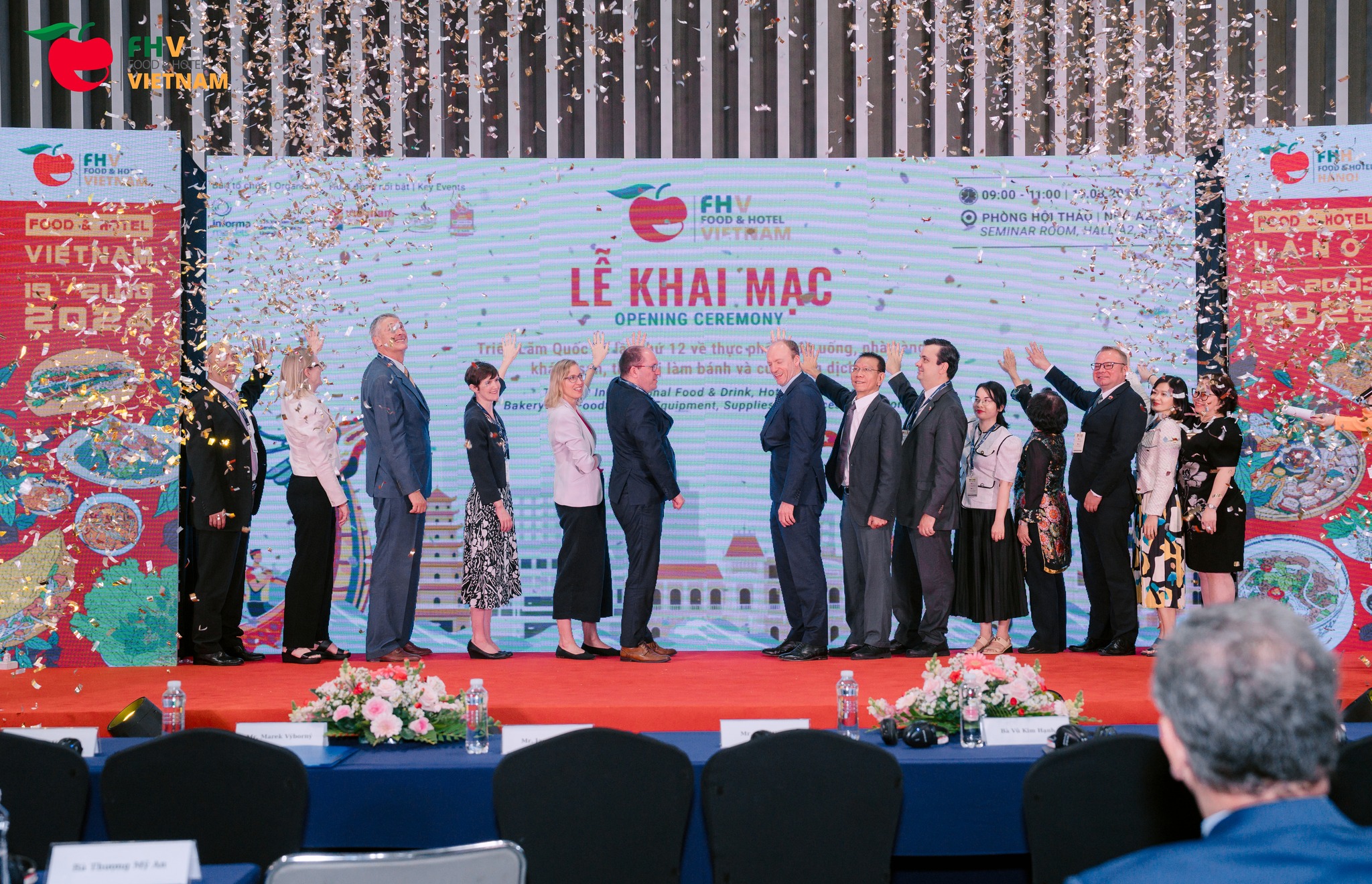
Opening Ceremony of Food & Hotel Vietnam 2024
Cuisine is entering a distinctly transformative phase. No longer centered on luxury ingredients or complex techniques, many restaurants and hotels across Asia–Pacific are returning to what feels closer and more familiar: local products, seasonal specialties, and even ingredients once overlooked in traditional kitchens.
This shift is not limited to fine dining. An increasing number of hospitality models, from boutique hotels to large restaurant chains, view local cuisine as a way to tell more authentic culinary stories, closely connected to the land and communities in which they operate. As a result, menus are no longer merely lists of dishes but become miniature cultural maps.
According to a survey conducted in the Asia–Pacific region by Marriott International, 85% of accommodation providers have already incorporated local ingredients or dishes into their menus. Research by Booking.com, surveying nearly 28,000 travelers from 33 countries and territories, shows that 81% of travelers want to experience local cuisine, while 61% are interested in learning about the origins of signature dishes at their destinations. These figures indicate that prioritizing local ingredients is no longer a trend-driven choice but is gradually becoming a new industry standard in Food & Hospitality.
However, behind the increasingly popular “local cuisine” narrative lies a series of practical challenges. Seasonal ingredients mean fluctuations in supply. Ensuring quality, cost control, and consistency becomes a complex equation, especially for large-scale operations. For many chefs and operators, the question is no longer whether to use local ingredients, but how to do so sustainably and effectively.
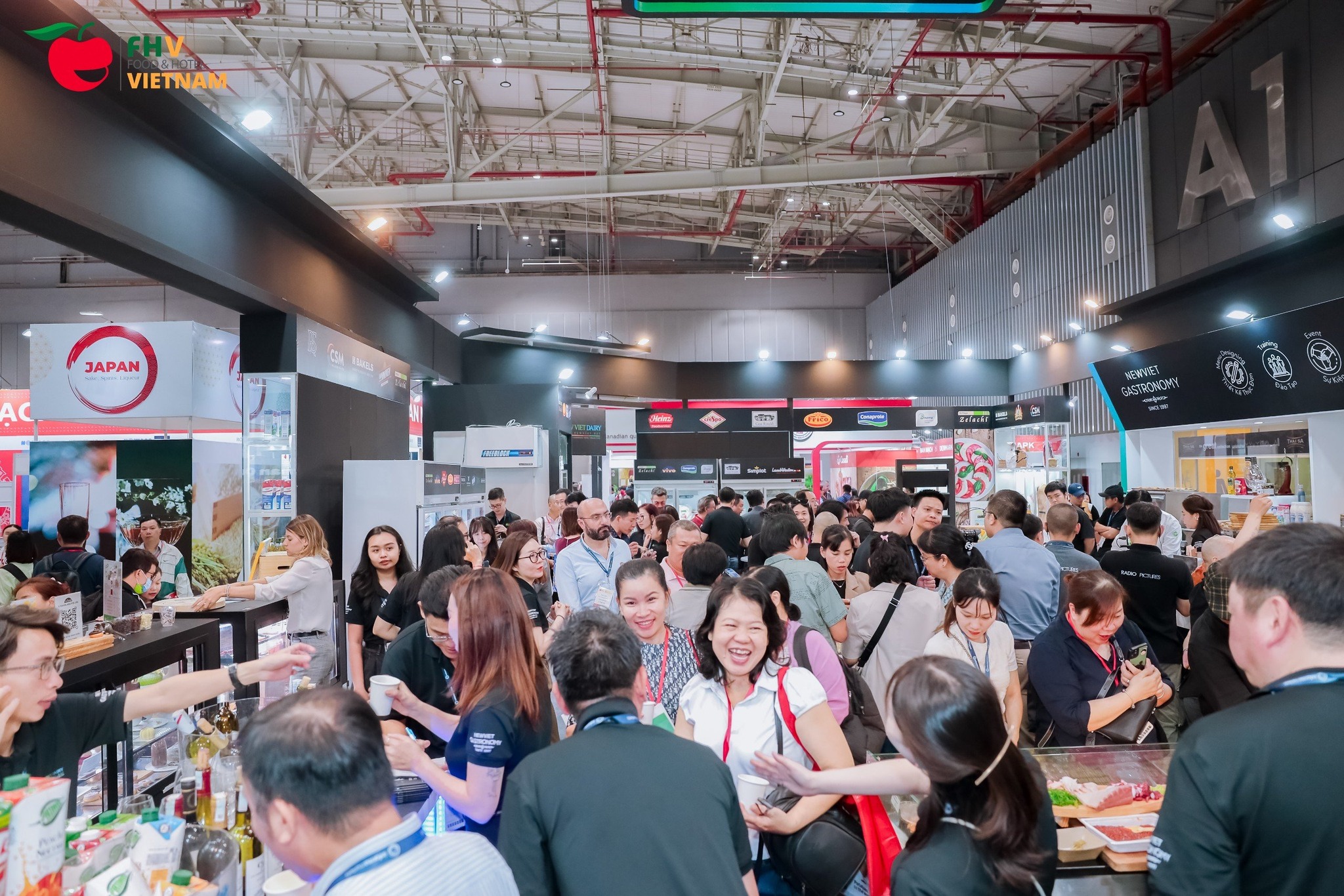
Exhibition space at Food & Hotel Vietnam 2024
In this context, professional connection platforms are becoming ever more important. Food & Hospitality Vietnam 2026, the 13th edition of the exhibition, clearly reflects this demand by serving as a meeting point for the F&B and hospitality community seeking solutions to localization, from ingredients, equipment, and technology to operational models aligned with modern market standards.
Food & Hospitality Vietnam 2026 is scheduled to take place at the Saigon Exhibition and Convention Center (SECC), 799 Nguyen Van Linh Boulevard, Tan My Ward, Ho Chi Minh City, with a total exhibition area of up to 13,000 square meters. The event is expected to host around 400 exhibitors from 21 countries and territories. It will feature 27 international pavilions, including Australia, Brazil, Canada, China, the Czech Republic, Denmark, Italy, Japan, the Netherlands, Poland, Taiwan, Thailand, the United States, and Uruguay. The exhibition is projected to welcome approximately 17,000 trade visitors, reflecting strong demand for connection, trade opportunities, and industry trend updates.
Beyond the exhibition space, Food & Hospitality Vietnam 2026 will host internationally scaled competitions in F&B and hospitality, such as the Vietnam Culinary Challenge, Barista Competition, Aromaster Championship, and notably the Vietnam Housekeeping Competition, held for the first time and co-organized by Informa Markets and the Vietnam Housekeeping Competition. These competitions translate trends from theory into practice, where local ingredients are not only discussed but directly handled, creatively interpreted, and evaluated through the skills and thinking of industry professionals.
In addition, the Housekeeping Championship is endorsed by the Vietnam Hotel Association (VHA) and co-organized with the Vietnam Housekeeping Club (VEH). The competition aims to honor professional skills, service standards, and the dedication of housekeeping staff - the often unseen yet essential force behind hotel operational quality.
Alongside these professional activities, the Buyer Program – FHV Premier Connect is designed specifically for potential buyers and high-quality exhibitors. Through pre-arranged one-on-one meetings, the program creates a direct bridge for businesses to optimize networking opportunities, exchange insights, and expand commercial partnerships within the F&B and hospitality industry.
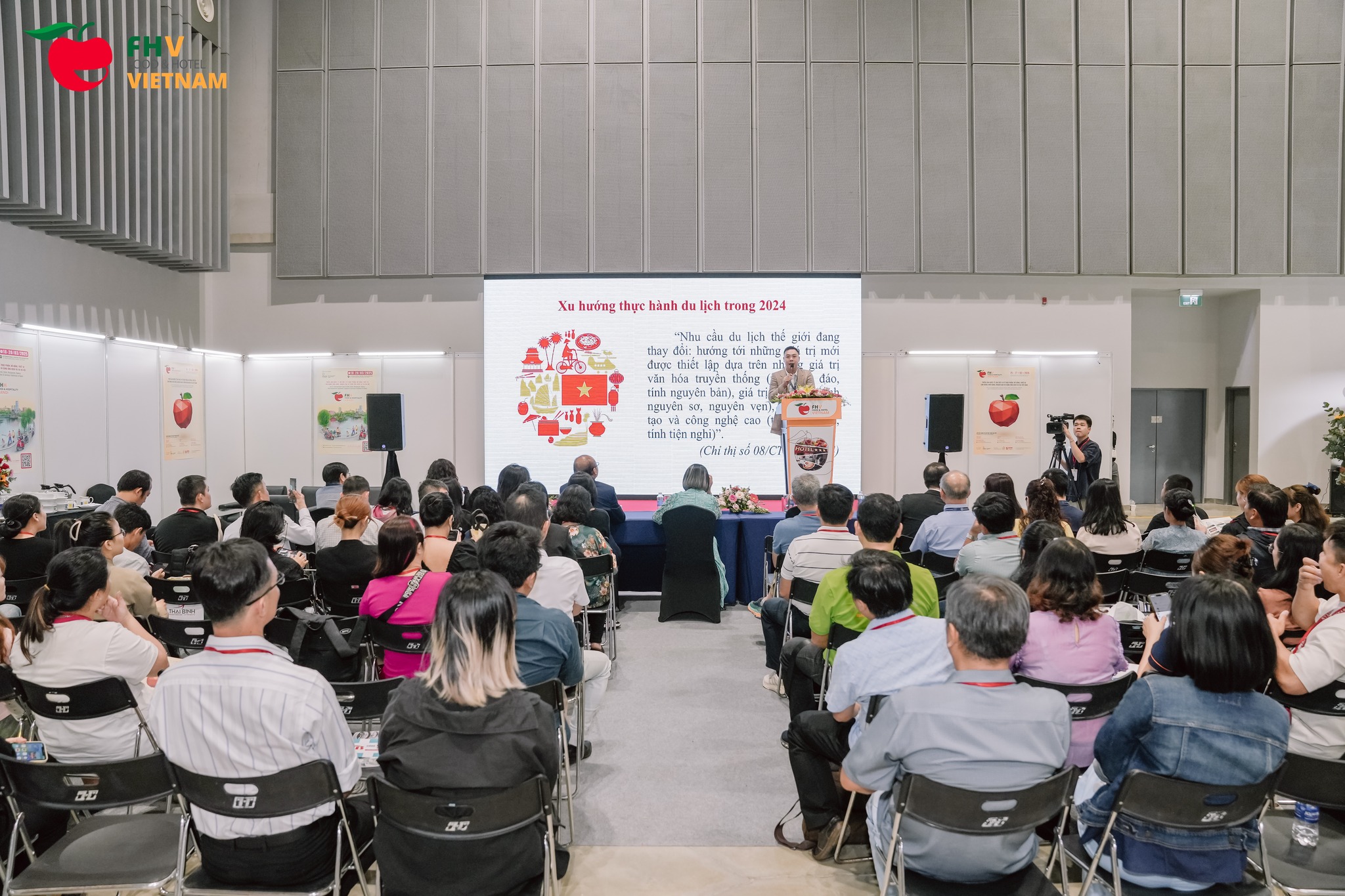
Industry seminar at Food & Hotel Vietnam 2024
Parallel to this is a series of industry seminars featuring participation from the Embassy of Canada, the Vietnam Executive Housekeepers Association, the Vietnam Hotel Association, and Asian Culinary and Bakery Academy Company Limited, Wowweekend, TIM CORP, ICE - Italian Trade Agency, The Norwegian Seafood Council (NSC), Master Martini Vietnam. These sessions provide a forum where managers, chefs, suppliers, and experts discuss localization in the context of global integration—from supply chain optimization and ingredient quality control to balancing local identity with international standards.
From a broader perspective, the return to local and seasonal ingredients raises a fundamental question for Vietnam’s F&B and hospitality industry: how to preserve identity while meeting the ever-rising expectations of the global market. As cuisine is increasingly recognized as part of cultural and destination experiences, connection platforms such as Food & Hospitality Vietnam 2026 not only reflect trends but also help shape how the industry operates, adapts, and grows in this new phase of transformation.