When the first new moon of the year rises, much of Asia enters a season where time seems to soften. The Lunar New Year is not merely a change of date on the calendar; it is a collective pause, a moment of return. Homes fill again with voices long absent, tables grow heavier with meaning, and food becomes the language through which families express hope, gratitude, and continuity.
Vietnam
Across Asia, Lunar New Year celebrations differ in rituals and flavours, yet they share a common philosophy: reunion. Meals are rarely eaten alone, dishes are rarely chosen at random, and almost every ingredient carries a wish, spoken or unspoken, for prosperity, longevity, harmony, or renewal. From Vietnam, Japan, Singapore and Hong Kong to Taiwan, Thailand and Seoul, Lunar New Year food customs reveal how deeply culture, memory and symbolism are intertwined at the dining table.
Vietnam: Flavours of Reunion
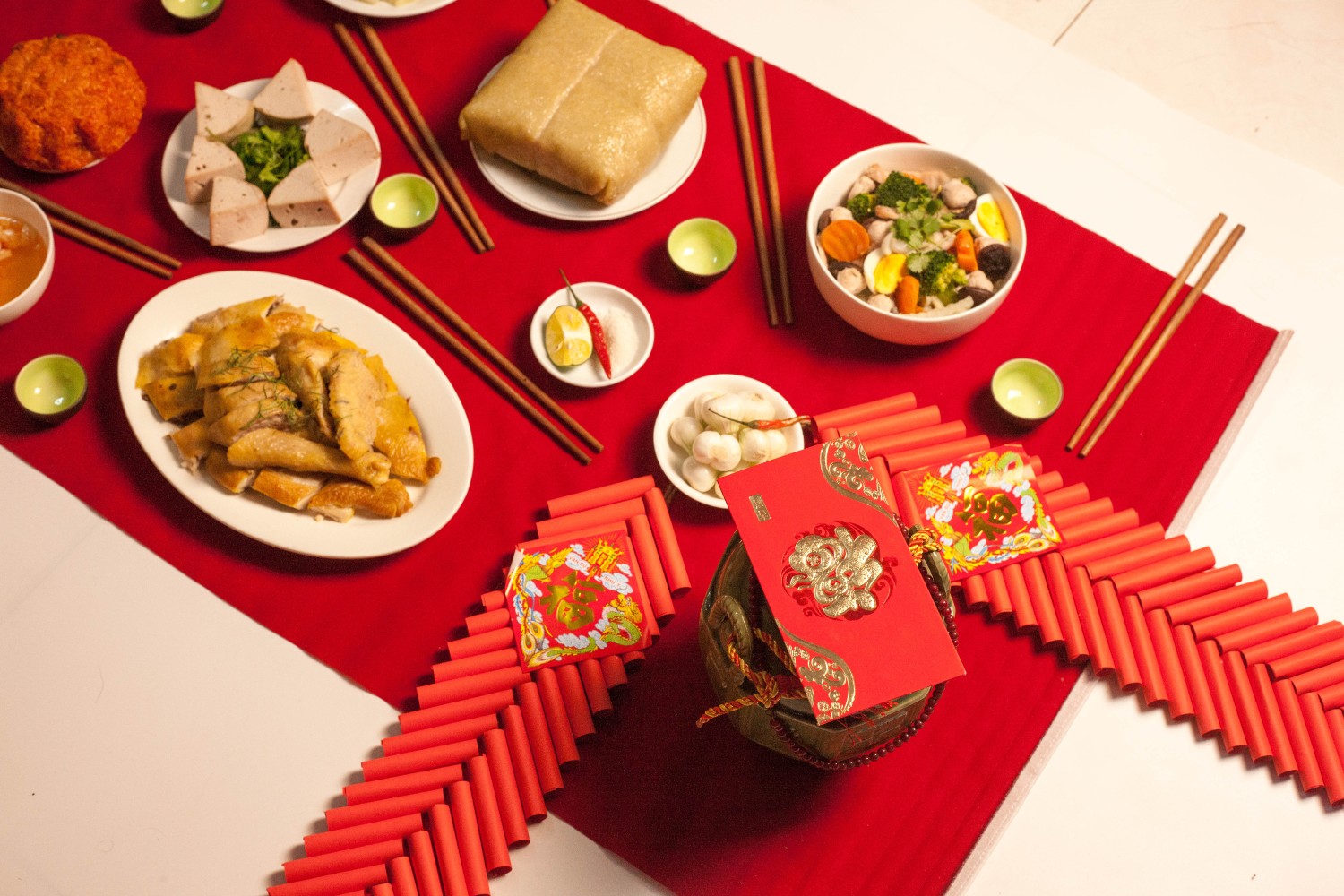
When Tết arrives, Vietnamese homes are filled not only with laughter and reunion, but also with the comforting aromas of dishes that have been prepared and cherished for generations. In the North, the heart of Tết often lies in bánh chưng—square sticky rice cakes symbolising the earth, patiently boiled through the night as families gather by the fire. Alongside it are vibrant xôi gấc (gac sticky rice), glowing red with wishes of luck, crisp pickled onions to balance richness, silky slices of giò, golden fried spring rolls, and a carefully presented boiled chicken, marking respect and completeness.
Central Vietnam celebrates Tết with refined flavours and thoughtful balance. Cylindrical bánh tét wrapped in banana leaves pairs beautifully with dưa món, a colourful mix of pickled vegetables that adds crunch and brightness. Nem chua, slightly sour and aromatic, brings warmth and conviviality to festive gatherings.
In the South, Tết tables feel generous and sun-kissed. Thịt kho nước dừa (carameled pork) simmers gently in coconut water, tender and comforting, often enjoyed with pickled vegetables. Bitter melon soup carries wishes of overcoming hardship, while củ kiệu with dried shrimp, dưa giá, and sweetsavory lạp xưởng (pork sausages) complete a meal that is joyful, abundant, and deeply rooted in family tradition.
Japan
Japan: Boxed Wishes for a New Dawn
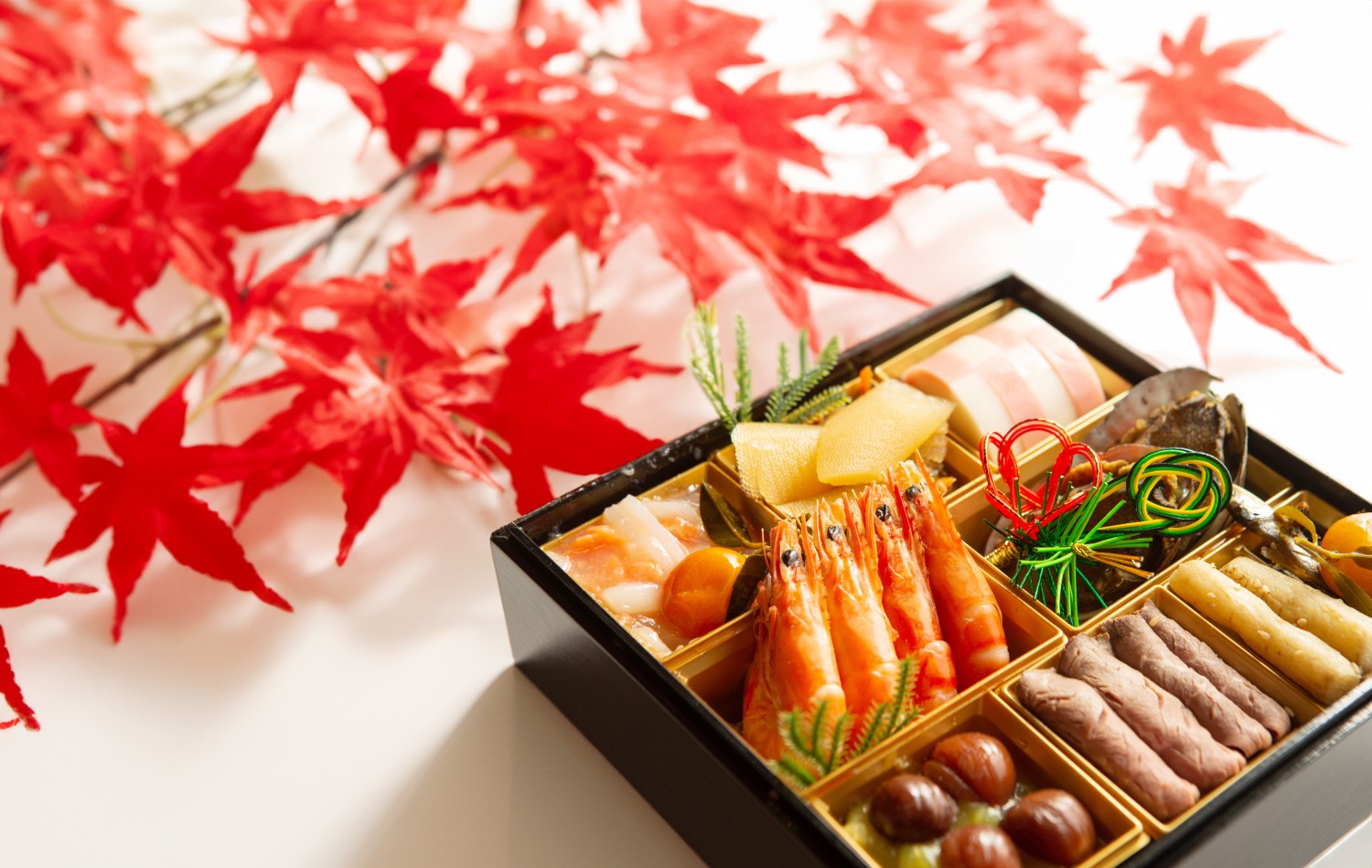
As Japan welcomes the New Year, the dining table transforms into a canvas of colour, symbolism and quiet reverence. Lunar New Year, or Shōgatsu, is a time of renewal, when families gather to honour the past and invite good fortune into the days ahead. At the heart of this celebration is osechi ryori, an elegant assortment of dishes arranged in tiered lacquered boxes known as jubako.
Each dish carries a gentle wish. Glossy black soybeans (kuromame) symbolise health and diligence, golden mashed sweet potatoes with chestnuts (kuri kinton) promise prosperity, and herring roe (kazunoko) speaks of fertility and continuity. Pink-and-white fish cakes evoke the rising sun, while whole grilled sea bream graces the table as a sign of celebration and joy. These dishes are prepared in advance, allowing the first days of the year to unfold slowly, without haste.
Alongside osechi, families share warm bowls of zōni, a comforting soup of mochi and seasonal vegetables that varies from region to region. On New Year’s Eve, long strands of toshikoshi soba are enjoyed, carrying hopes for longevity into the coming year. Whether lovingly homemade or carefully selected from a shop, Japanese New Year meals are an expression of harmony where food, family and hope come together to greet a new beginning.
Singapore
Singapore: When Abundance Is Tossed Into the Air
In Singapore, Lunar New Year unfolds with theatrical warmth. Food here does not simply arrive at the table, it performs.
One of the most recognisable festive staples is bak kwa, the glossy sheets of barbecued pork jerky whose red hue mirrors the colour of good fortune. Traditionally enjoyed only once a year, bak kwa was once considered a luxury, a treat saved for the most auspicious moment. Bak kwa is still grilled over charcoal, allowing smoke and caramelised sweetness to linger long after the first bite. Its presence on the table speaks of indulgence earned, abundance welcomed.
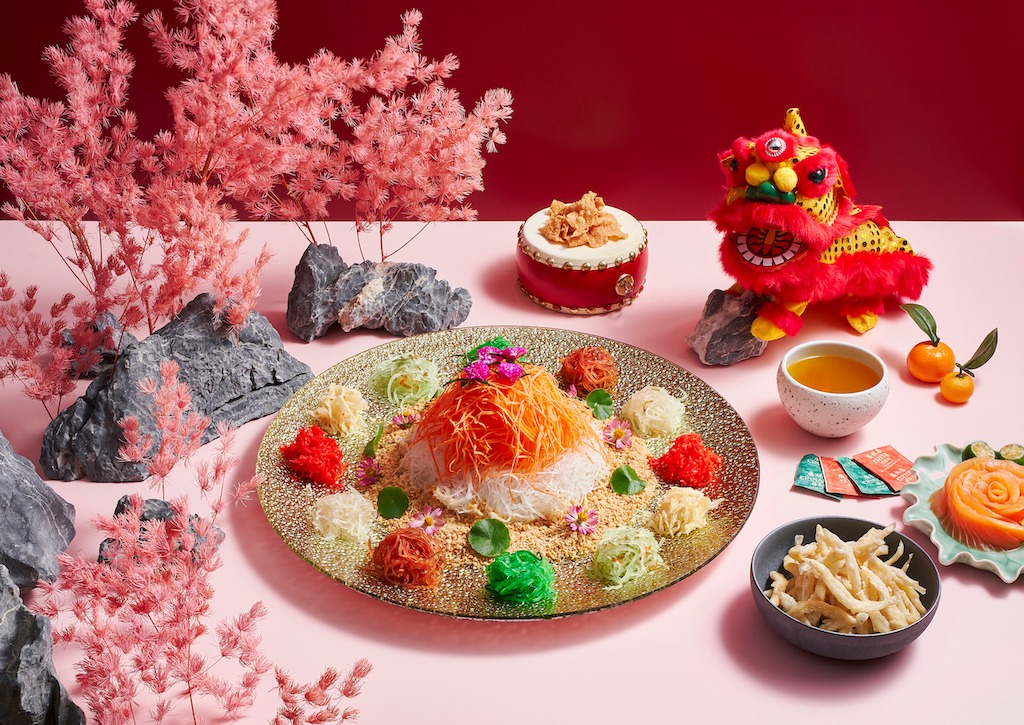
If bak kwa is enjoyed quietly, yu sheng is anything but. This raw fish salad, vivid with shredded vegetables, plum sauce, oil and crunchy toppings, is the centrepiece of communal celebration. As diners gather around the dish, chopsticks rise together, tossing the salad skyward in a ritual known as lo hei. Each movement is accompanied by auspicious phrases, wishes for success, wealth and happiness layered as deliberately as the ingredients themselves. Yu sheng becomes a social catalyst, breaking formality and reminding everyone present that celebration is meant to be shared.
Taiwan
Taiwan: The Warmth of Gathering, One Pot at a Time
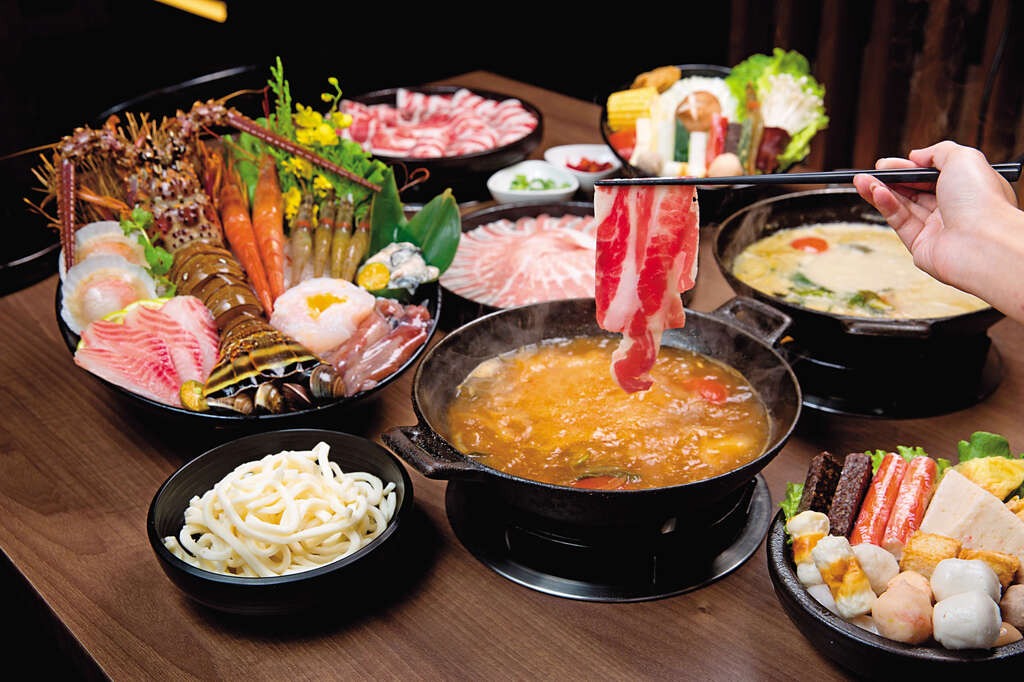
In Taiwan, Lunar New Year is anchored by warmth, both literal and emotional. Families gather around hot pot, a meal defined not by fixed rules but by participation. Ingredients are added freely, conversations unfold slowly, and the act of cooking together becomes part of the celebration itself. Seafood-filled broths recall coastal roots, while symbolic ingredients like white pomfret, whose name sounds like “prosperity” in Chinese, quietly reinforce New Year hopes.
Another essential presence on Taiwanese New Year tables is the whole chicken. Served intact, it symbolises completeness and unity, the idea that family life, like the calendar year, comes full circle. Often prepared for ancestral offerings before being eaten later, the dish embodies continuity between past and present. Whether steamed delicately or smoked over sugarcane, the whole chicken carries a message beyond flavour: nothing important should be broken apart.

Hong Kong
Hong Kong: Sweet Reunion and Shared Prosperity
In Hong Kong, Lunar New Year dishes often rely on wordplay - sounds that echo wishes. Few dishes capture this more clearly than tong yuen, glutinous rice balls served in ginger-infused syrup. The name itself sounds like “reunion” in Cantonese, making it a natural choice for a festival centred on togetherness. Soft, sticky and gently sweet, tong yuen is often enjoyed at the close of a meal, sealing the gathering with warmth.
For larger celebrations, poon choi takes centre stage. Originating from New Territories village feasts, this layered dish is assembled in a large basin, with premium ingredients like abalone and sea cucumber placed on top, symbolising prosperity rising from a solid foundation. Modern interpretations of poon choi retain its communal essence while refining its presentation. The dish is not meant to impress through excess, but through unity, everyone partakes from the same vessel, equal in celebration.
Korea
Korea: One Bowl, One Year Older
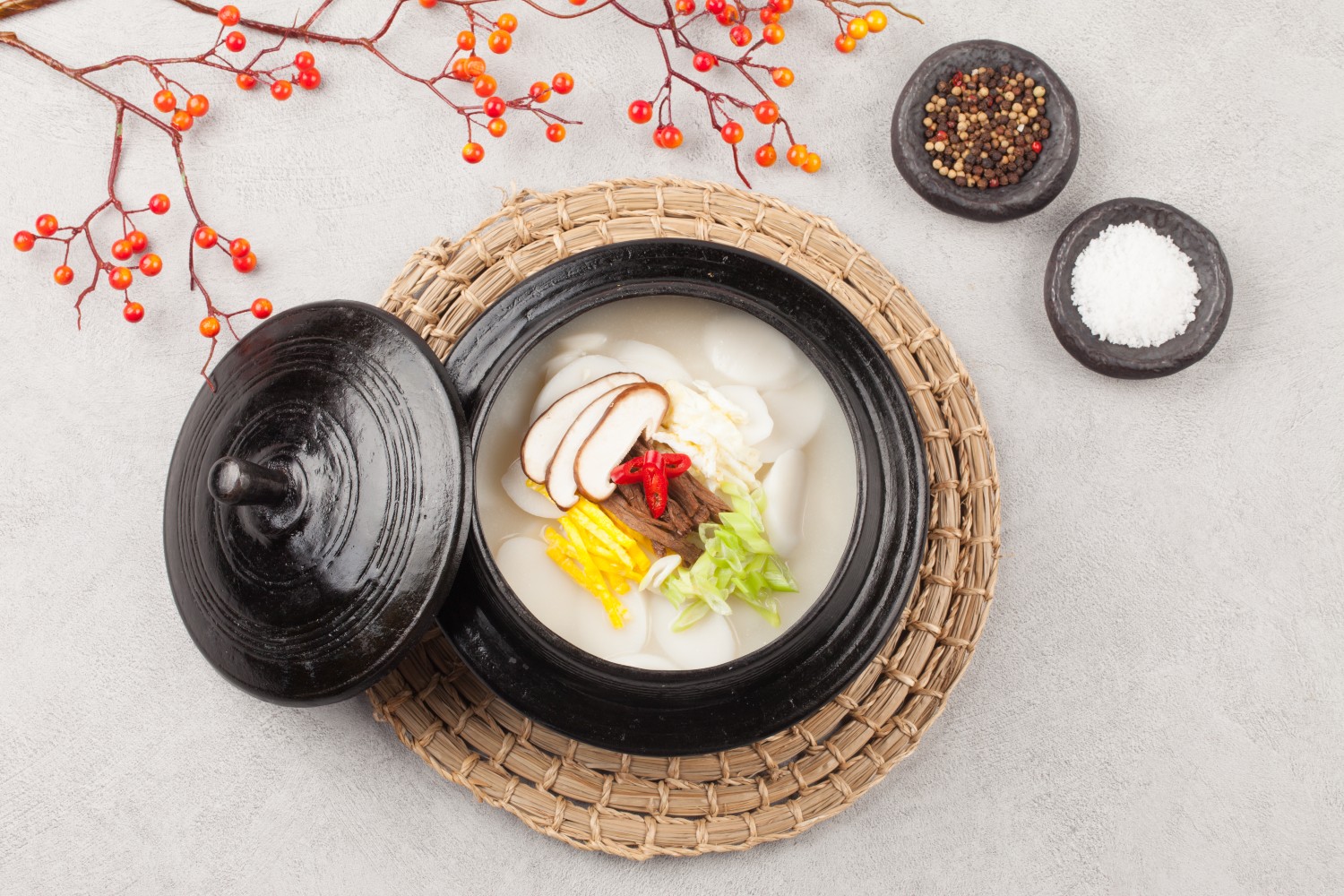
In Korea, Lunar New Year—Seollal—is defined by a single dish: tteokguk. This rice cake soup is eaten on New Year’s Day with a belief both symbolic and literal: by finishing a bowl, one gains another year of age and wisdom.
Tteokguk is prepared with deep, patient care. Beef bone broth simmers into clarity, oval rice cakes float like pale coins, and garnishes add texture and depth. Each family, each region, has its own version, making tteokguk a dish of infinite variation. To eat it is to step forward in time, sometimes joyfully, sometimes with playful reluctance but always together.
In the end, Lunar New Year is not about extravagance or perfection. It is about presence. A seat at the table. A shared dish passed from hand to hand. And the simple, enduring hope that the coming year will be kinder, fuller, and lived together.